


What does a grant of probate look like, and who needs a copy?

A grant of probate is a single-page HMCTS document, often called a certificate, with a hologram and a digital seal. It names the executors, and the will is attached where there is one. Banks, HM Land Registry and NS&I are among those who will ask to see a copy.
Grant of probate, letters of administration and grant of representation are names for the same family of documents, according to GOV.UK. Which one you receive depends on whether there is a will and whether an executor can act. In England and Wales, the grant is the legal confirmation that the executor named in the will, or the administrator, has the right to deal with the deceased person's estate. If you are the person dealing with an estate, this guide explains what the grant looks like, how official copies differ from public record copies, how many to order and what to do if something goes wrong.
What the grant of probate looks like today
Many people expect an ornate certificate on thick paper. In practice, the current grant is a clean, single-page document issued by HMCTS through the probate registry. The Gazette published an official notice about the new style of grant, which describes these features:
- A high-security hologram in the bottom right corner.
- A digital seal and signature, which add to the document's security.
- A validation phone number, so that anyone relying on the document can check it is genuine.
Older grants have not been cancelled. The Gazette notice says both the old and the new styles remain valid, so if an organisation shows you a grant that looks different from the one you received, that is not a sign of a problem.
You may also see the phrase "Grant and Will" in connection with some grant types. GOV.UK's guidance on searching for a will or grant explains that certain types of grant include the will, which is attached to the document. That is why a grant of probate for a person who left a will often comes with the will itself.
When is a grant of probate certificate needed?
Not every estate needs a grant. GOV.UK explains that you may not need probate if the deceased person's estate was small, or if everything was jointly owned and passes automatically to the surviving owners, such as a house or bank account held in joint names. Each bank or other institution sets its own limit for releasing money without a grant, so it is worth asking them before you apply.
In most other cases, you will need to apply for probate before you can collect the assets, sell the house or distribute the estate. The probate application costs £526 where the estate is worth more than £5,000, and there is no fee if it is worth £5,000 or less.
Before you apply, you also need to work out the value of the estate and report it to HMRC. If inheritance tax is due, GOV.UK says you must pay at least some of it before you can get probate. The HMRC Probate and Inheritance Tax Helpline can help if you are unsure which inheritance tax forms apply.
If the person lived in Scotland, the process is different: the equivalent document there is called confirmation, and this guide covers England and Wales only.
Original, official copy or downloaded copy: what is the difference?
This is where families often get caught out. There are two routes to getting a copy of a grant, and they are not the same thing.
| Official copy | Public record copy | |
|---|---|---|
| Where it comes from | The probate registry, ordered through the grant application | The probate search service on GOV.UK |
| What it is | A copy of the grant supplied by the registry for you to send to asset holders | A copy of the grant from the public record |
| Cost | £2 each with the application, £16 each afterwards | £16 |
| Who can order | The person applying for the grant | Anyone, through the search service |
Official copies are covered on GOV.UK's probate fees page, and public record copies on the search will and probate page.
The practical point is that some organisations will not accept a plain download or a photocopy of a grant. If they ask for an official copy and you only have a public record version, you may have to start again. Where you can, order official copies at the start and hold on to the original. The original document is the one you will want to keep safe, because replacing it means extra cost and delays while you wait for the registry to respond.
Who will ask to see a copy
Once you start closing accounts and collecting assets, you will find banks, financial institutions and other organisations want proof that you have the legal right to act. The table shows the usual ones.
| Who | Why they want it | Source |
|---|---|---|
| Banks and other asset holders | To release or close accounts | GOV.UK, after you have applied |
| HM Land Registry | To update the register for a home owned in the person's sole name | GOV.UK, update property records |
| NS&I | May ask for a grant where savings total £5,000 or more | NS&I |
| Pension and insurance companies | To pay out or close policies | General example |
| Share registrars and investment firms | To transfer or sell holdings | General example |
GOV.UK says to give copies of the grant to the organisations that hold the person's assets, such as banks. For a home owned in the sole name of the person who died, HM Land Registry needs the original or an official copy of the grant, as set out in GOV.UK's guidance on updating property records.
NS&I, which looks after Premium Bonds and other savings, says on its bereavement page that it may ask for a grant where the person held £5,000 or more with NS&I, and it can ask for one on smaller amounts too.
The rules differ from one organisation to the next, so it is sensible to check each one's requirements before you post anything. Most will also ask for a copy of the death certificate, details of the executor and a forwarding address for the payment, so have all the information ready to send together.
How many copies should you order?
The cheapest time to order copies is when you apply. GOV.UK's fees page says each extra official copy costs £2 when you order it with the application, but £16 when you order it afterwards. The main application fee is £526 for estates worth more than £5,000. The same document costs eight times as much if you leave it until later.
Getting this right early is one of the easiest ways to save time and money in the probate process. To work out a sensible number:
- List every organisation you expect to deal with, such as banks, pension providers, insurers and NS&I.
- Add one for HM Land Registry if the person owned a home alone.
- Add one or two spares in case an organisation keeps its copy or asks for another.
Because the organisations may deal with the paperwork at the same time, having several copies lets you work in parallel rather than waiting for one to be returned. A few extra copies at £2 each costs far less than reordering them at £16 later.
How to get a copy later
If you did not order enough copies, or you need one for another reason, you can still get hold of one.
GOV.UK's search will and probate service lets you order a copy of a grant from the public record, online or by post. If you order by post, you use form PA1S. The cost is £16 for each copy.
The grant does not appear in the public record straight away. GOV.UK says the record is available about 14 days after the grant is issued, so anyone checking for a very recent grant may need to wait.
Lost the grant, or spotted a mistake?
Mistakes on a grant are not unusual, and they can usually be put right. GOV.UK says that if you find an error, you should return the grant to the district probate registry named on it so it can be corrected. Check the grant when it arrives rather than weeks later, because an error can hold up everything that depends on it.
If you cannot find the original, you can order a copy from the public record, as described above. However, some organisations may still prefer an official copy, so ask them what they will accept.
Keeping the original safe matters. A good habit is to keep it in one secure place, send official copies out, and note who has received which one. Dealing with copies, forms and follow-up calls is a big part of an executor's workload, and many families choose a probate solicitor or specialist to handle it. Our fixed fee probate service can take that on, including chasing organisations until the funds are released.
Let us deal with the paperwork
Keeping track of who has seen the grant, and chasing them to release funds, is a big part of the job. Our fixed fee probate service handles it for you. Request a callback or call 0800 028 2837.
Key takeaways
- The current grant is a single HMCTS document with a hologram and digital seal, and older styles remain valid.
- Banks, HM Land Registry and NS&I are among those who will want to see a copy.
- Order extra copies with the application at £2 each, as later copies cost £16.
- Anyone can buy a copy of a grant from the public record for £16.
- Check the grant on arrival and return any mistakes to the probate registry.
Frequently asked questions
Is a grant of probate a certificate?
People often call it a certificate, but it is a court document issued by HMCTS through the probate registry. Grant of probate, letters of administration and grant of representation are names for the same family of documents, depending on the situation.
How much is a copy of a grant of probate?
Official copies cost £2 each if you order them with your application and £16 each afterwards. A copy from the public record also costs £16.
Can I download a grant of probate?
You can order a copy from the public record through GOV.UK's search service. However, some organisations want an official copy rather than a plain download, so check what each one will accept.
How do I get another copy of the grant later?
You can order a copy online or by post using form PA1S. Each copy costs £16, and the record appears about 14 days after the grant is issued.
Do I need a grant of probate certificate for jointly owned property?
Usually not. Property and money owned jointly as joint tenants normally pass straight to the surviving owners without a grant. You may still need probate for anything the person owned in their sole name.
Do I need to pay inheritance tax before I get the grant?
If inheritance tax is due, GOV.UK says you must pay at least some of it before you can get probate. You also need to report the value of the estate to HMRC before you apply for probate.
Is the old style of grant still valid?
Yes. The Gazette says both the old and the new styles of grant are valid, so you can use whichever one you were given.
Useful resources
- GOV.UK: Search for a will or grant of probate
- GOV.UK: Probate fees
- The Gazette: New style of grant of probate certificate
- GOV.UK: After you have applied for probate
- NS&I: What to do if an NS&I customer has died
Share This Post


Recent posts
- What is a deed of variation and when does it make sense? By Probate Bureau , 26/11/2026
- What does a grant of probate look like, and who needs a copy? By Probate Bureau , 26/11/2026
- Probate property valuations: how to get it right first time By Probate Bureau , 25/11/2026
2015 Archive
2016 Archive
2018 Archive
2019 Archive
2020 Archive
2026 Archive
2023 Archive
- July 13 posts
0 Archive
- December 1 posts
Blog Categories
Find your way through the probate maze
Click here to follow our step-by–step probate process guide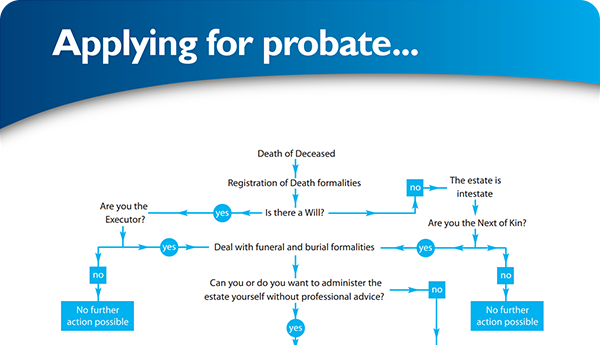
Testimonials
Excellent service, everything went very smoothly. Like to thank Ann and her team.... read more
Good & Reliable service, always kept up to date with what was happening. Value for money.... read more
Latest Tweet
Follow @ProbateBureau


Contact Us
0800 028 2837 info@probatebureau.comTHE PROBATE BUREAU
3 Crane Mead Business Park
Crane Mead
Ware
Hertfordshire
SG12 9PZ
×